7 Common Budgeting Mistakes and How to Avoid Them
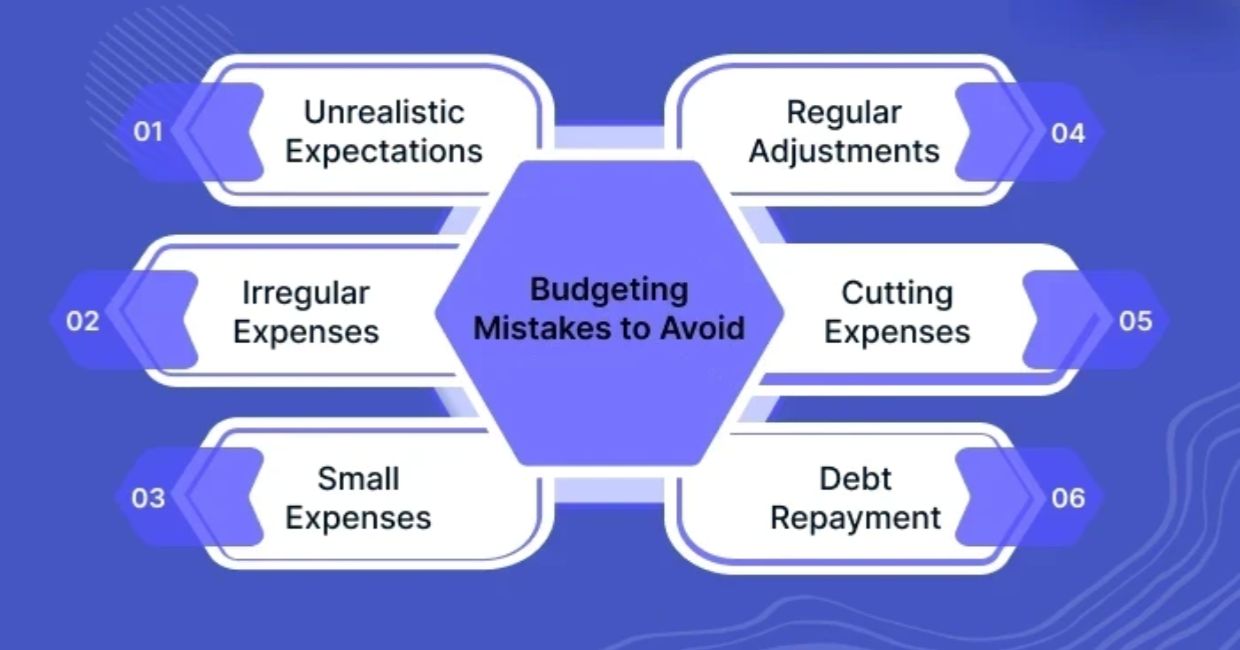
Budgeting Mistakes
Budgeting is one of the smartest financial habits you can develop — it helps you take control of your money, plan for your goals, and avoid unnecessary debt. Yet, even with the best intentions, many people struggle to make their budgets actually work.
Why? Because small mistakes can quietly derail your financial plan without you even realizing it.
If you’ve ever created a budget and found yourself wondering, “Why isn’t this working?”, this article is for you. Let’s explore the 7 most common budgeting mistakes people make — and, more importantly, how to avoid them for good.
How to Build a Budget You’ll Actually Stick To
1. Not Having Clear Financial Goals
The biggest budgeting mistake you can make is starting without a purpose. Many people set up a budget simply because they’ve been told they should, not because they have a clear financial vision in mind.
But here’s the truth: if you don’t know what you’re budgeting for, you won’t stay motivated to stick with it.
A budget is a tool — and every tool needs a purpose. Without one, it’s easy to lose focus and give up when things get tough.
How to Fix It
Start by defining your short-term and long-term financial goals.
Ask yourself:
- What do I want to achieve in the next 6 months?
- What are my 3–5 year financial priorities?
- What would financial freedom look like for me?
Your goals could include:
- Paying off credit card debt
- Saving for an emergency fund
- Planning a vacation
- Buying a home
- Building an investment portfolio
Once you have a clear “why,” your budget becomes a roadmap instead of a restriction. Every decision you make will align with something meaningful.
Example:
If your goal is to save $5,000 for an emergency fund, you’ll think twice before spending $200 on impulse shopping. The goal gives your budget direction and purpose.
2. Underestimating Expenses (or Forgetting Some Entirely)
A common reason budgets fail is that people underestimate what they actually spend. You might think your monthly expenses are $2,000 — until you remember your car registration, annual subscriptions, birthday gifts, or medical costs.
Forgetting irregular or seasonal expenses makes your budget look great on paper, but impossible to stick to in real life.
How to Fix It
Be honest and thorough. Track every expense for at least one month to get a realistic picture of your spending habits.
Include everything, such as:
- Groceries and eating out
- Utilities, internet, and phone bills
- Gas and transportation costs
- Insurance premiums
- Annual fees or subscriptions (Amazon, Netflix, etc.)
- Gifts and celebrations
- Medical or dental visits
- Clothing, grooming, and personal care
Once you’ve listed everything, calculate your average monthly cost — even for irregular expenses. You can divide annual costs (like car insurance or holidays) by 12 and set aside that amount each month in a separate “future expenses” fund.
Pro Tip: Add a small “miscellaneous” category for unplanned spending. It acts as a buffer and keeps you from breaking your budget when surprises pop up.
3. Being Too Strict or Unrealistic
Another major budgeting mistake is setting unrealistic limits that don’t reflect your real life.
People often get excited when they start budgeting and set extreme goals — like cutting dining out from $200 to $20 a month or saving half their income overnight. While ambitious, this kind of restriction often backfires.
Eventually, you feel deprived, give up, and end up overspending.
How to Fix It
Create a budget that fits your lifestyle — not someone else’s.
Start by analyzing your past spending and then reduce categories gradually. If you currently spend $400 on dining out, try cutting it to $300 next month — not $50. Small, steady improvements are far more sustainable than drastic cuts.
Remember: A good budget should challenge you, not punish you.
Include fun and flexibility in your plan. It’s okay to budget for entertainment, hobbies, or takeout — just keep it intentional.
Example:
If you love coffee, don’t eliminate it entirely. Instead, set a $30 “coffee budget.” You’ll still enjoy your treat without guilt, and your plan will be easier to maintain long-term.
4. Forgetting to Track and Review Spending
Creating a budget is only half the job — sticking to it requires tracking and review.
Many people write down their plan at the beginning of the month but never check back to see if they’re actually following it. As a result, small overspending in a few categories adds up, and by the end of the month, they’re left wondering where their money went.
Budgeting is not a “set it and forget it” activity — it’s a living plan that needs attention.
How to Fix It
Set a regular schedule to check your spending — weekly works best.
You can use apps like:
- YNAB (You Need A Budget)
- Mint
- EveryDollar
- Or a simple spreadsheet or notebook
During your weekly check-in, ask:
- Am I staying within my limits?
- Are there any expenses I didn’t plan for?
- Do I need to adjust next month’s categories?
At the end of each month, review your spending patterns. Identify what worked and what didn’t — then refine your next budget accordingly.
Pro Tip: Make tracking a routine. For example, review your finances every Sunday morning or at the end of each work week.
5. Ignoring Small Purchases
It’s often not the big expenses that ruin a budget — it’s the small, frequent ones that sneak under the radar.
A $5 coffee, a $10 app subscription, a $20 lunch — none of these feel like much in the moment, but over a month, they can quietly add up to hundreds of dollars.
These micro-expenses are the silent killers of budgeting success.
How to Fix It
The solution isn’t to stop spending altogether — it’s to be aware.
- Track every purchase, no matter how small.
- Review your bank statements weekly to spot habits that cost more than you realize.
- Use the “24-hour rule” for impulse purchases — wait a day before buying non-essentials.
You’ll often find that many small purchases don’t bring lasting value — and cutting them out won’t hurt as much as you think.
Example:
If you buy coffee every weekday for $5, that’s about $100 per month. Brewing at home just three days a week could save you $60 monthly — or $720 a year.
Redirect that money toward a savings goal, and you’ll see real progress fast.
6. Not Accounting for Fun or Flexibility
Many people think budgeting means cutting out everything enjoyable. They try to be ultra-disciplined — no eating out, no entertainment, no shopping — and end up resenting their budget.
When your financial plan feels like a punishment, it’s only a matter of time before you give up completely.
How to Fix It
A successful budget should include balance — not deprivation.
- Add a category for “fun money” or “personal spending.”
- Decide in advance how much you can spend guilt-free on things you enjoy.
- If you have a partner, give each person a personal allowance to spend as they wish.
This doesn’t mean being reckless — it means giving yourself permission to enjoy your money responsibly.
When your budget reflects your real life — hobbies, dining out, entertainment — you’ll be far more likely to stick with it long-term.
Pro Tip: Build flexibility. If you overspend in one category (like eating out), adjust by spending less in another (like entertainment). A little give-and-take keeps your budget realistic.
7. Not Reviewing or Updating Your Budget Regularly
Even the best budget will eventually fail if it’s never updated. Life changes — your income, expenses, goals, and priorities evolve over time. Yet many people stick to the same budget month after month, even when it no longer fits their reality.
When your budget becomes outdated, it loses its effectiveness.
How to Fix It
Make it a habit to review your budget every month — or at least quarterly.
During your review:
- Adjust your spending categories to match current needs.
- Update your income and recurring bills.
- Revisit your goals — are they still relevant?
- Reflect on what’s working and what isn’t.
If your rent increases, your car insurance drops, or you start a new side hustle — your budget should reflect those changes immediately.
Example:
If you get a raise, don’t just increase your spending. Allocate part of it toward savings, debt payoff, or investments. This ensures your improved income builds wealth instead of fueling lifestyle inflation.
A flexible, evolving budget grows with you — and that’s what makes it sustainable.
Bonus Mistake: Not Automating Your Finances
While not one of the “big seven,” this is a silent mistake many people make. Managing money manually can be stressful — and it’s easy to forget payments or transfers.
How to Fix It
Automate your finances as much as possible:
- Set up automatic bill payments to avoid late fees.
- Schedule automatic transfers to your savings account on payday.
- Use automation tools to invest a small percentage of your income monthly.
Automation takes willpower out of the equation. When saving and paying bills happen automatically, sticking to your budget becomes effortless.
The Psychology Behind Budgeting Mistakes
Budgeting isn’t just about math — it’s about behavior.
Most budgeting mistakes stem from emotional decisions rather than logical ones. We overspend to reward ourselves, to cope with stress, or simply because we’re not fully aware of our habits.
To succeed, you must address the psychological side of money:
- Practice mindfulness before spending.
- Set boundaries for emotional or impulsive purchases.
- Celebrate progress to stay motivated.
By understanding your financial mindset, you can build healthier money habits that last a lifetime.
How to Build Better Budgeting Habits
Avoiding budgeting mistakes is important — but creating positive habits is what will keep your budget on track long-term.
Here are a few key practices to adopt:
- Pay yourself first: Save automatically before spending anything else.
- Use cash for discretionary spending: It helps limit overspending.
- Have regular “money dates”: Review your finances weekly or monthly.
- Keep learning: Read about personal finance, watch videos, or follow credible finance blogs.
- Be kind to yourself: Slip-ups happen — what matters is getting back on track quickly.
Good budgeting is about consistency, not perfection.
Putting It All Together: A Smarter Way to Budget
Here’s how to combine all these lessons into a realistic, stress-free budgeting plan:
- Start with your why. Know exactly why you’re budgeting — that’s your motivation.
- List all income and expenses. Include every detail, even small or irregular ones.
- Be realistic. Don’t try to overhaul your spending habits overnight.
- Track regularly. Use tools or apps to stay aware of your money.
- Build flexibility. Allow yourself room for fun and unexpected costs.
- Adjust and automate. Review monthly and automate as much as possible.
If you follow this approach, you’ll create a system that not only helps you manage money — but helps you enjoy it too.
Final Thoughts
Budgeting isn’t about restricting your life — it’s about giving yourself financial control and confidence.
When you understand the 7 common budgeting mistakes and learn how to avoid them, you set yourself up for long-term success. You’ll stop wondering where your money goes and start telling it where to go.
Remember: A successful budget isn’t perfect — it’s personal. It should fit your goals, adapt to your lifestyle, and evolve as your life changes.
Start small, stay consistent, and you’ll find that budgeting becomes less of a chore and more of a powerful habit that leads you toward financial freedom.