7 Promising Altcoins to Watch This Year
Altcoins
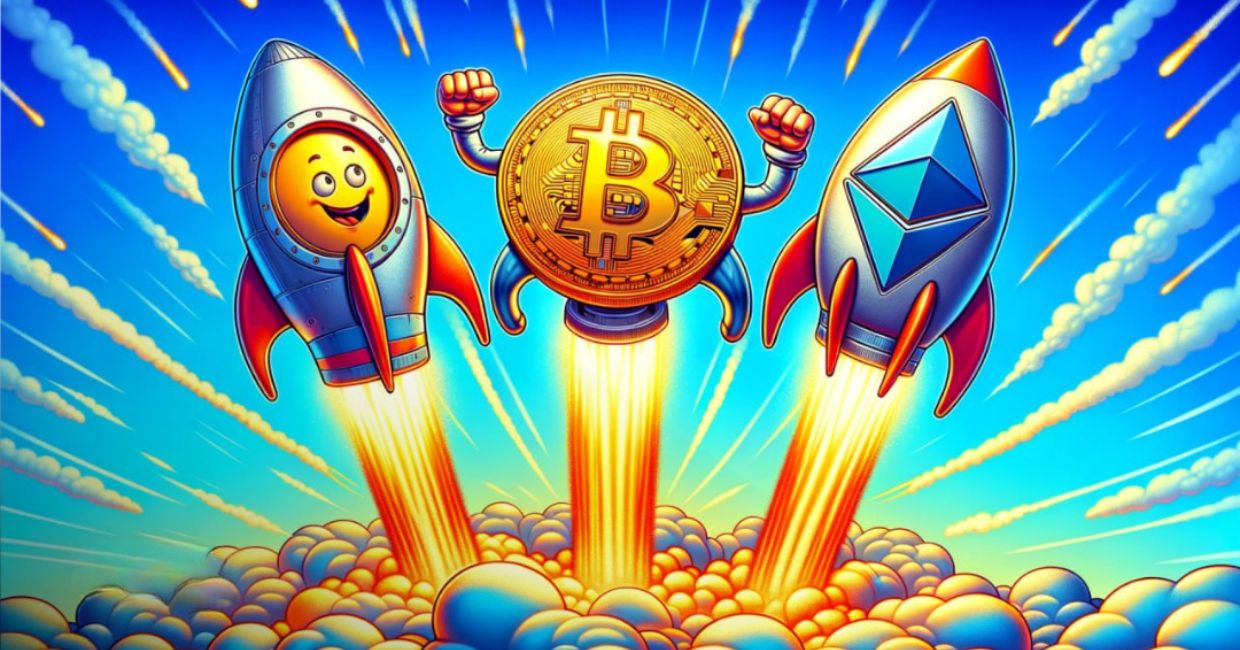
The world of cryptocurrencies is vast and volatile, and while it’s tempting to chase the next “100×” coin, success more often comes from informed decisions rather than hype. In this article we’ll walk through seven altcoins (i.e., cryptocurrencies other than Bitcoin) that are gaining traction and have characteristics worth watching this year. We’ll examine what they do, why they may have upside, and what risks to keep in mind.
The Future of Bitcoin: Still Worth Investing in 2025?
What Makes an Altcoin “Promising”?
Before diving into the coins themselves, it helps to understand what makes an altcoin worth watching:
- Real utility: The token/project addresses a meaningful problem (scalability, interoperability, DeFi, storage, AI, etc.).
- Strong ecosystem: Developers working on it, partnerships, adoption or growing user-base.
- Good tokenomics: Clear supply structure, transparent roadmap, manageable dilution.
- Differentiation: Something that sets it apart from other tokens, not just an imitation.
- Risk awareness: Even the best projects have risk—technical, regulatory, market sentiment.
With that in mind, here are seven altcoins that meet many of those criteria and are worth following this year.
1. Ethereum (ETH)
Why it’s worth watching
Ethereum remains the dominant smart-contract platform, powering a huge ecosystem of decentralized applications (dApps), DeFi projects, NFTs and much more. Many analysts consider Ethereum foundational to the crypto ecosystem. (Geek Metaverse)
Ethereum’s transition (and ongoing upgrades) to improve scalability, reduce fees and increase throughput give it a promising platform posture. Its dominance means large infrastructure and developer base backing it.
Key strengths
- Massive ecosystem and network effect.
- Widely-recognized, relatively less speculative than many smaller altcoins.
- Many upcoming upgrades and enhancements (layer-2 solutions, sharding, etc.).
Risks/Considerations
- Because it is large and well-known, much of the easy upside may already be priced in.
- Competition from newer blockchains with faster/smaller-fee structures.
- Scalability and upgrade execution risk.
Bottom line
Ethereum is less “moon-shot” and more “solid core piece” for your crypto exposure. If you believe in the long-term utility of smart-contract platforms, ETH remains a key hold.
2. Solana (SOL)
Why it’s worth watching
Solana positions itself as a high-speed, low-fee smart-contract chain, designed to challenge older blockchains by offering very fast transaction throughput and relatively lower costs. (Geek Metaverse)
It’s been gaining traction in DeFi, NFT and gaming applications, which could give it strong tailwinds this year.
Key strengths
- Strong performance speed (many thousands of transactions per second).
- Growing ecosystem of apps (gaming, NFTs) which may support adoption.
- Positioning as a “Ethereum alternative” with a differentiated value proposition.
Risks/Considerations
- Still suffering from occasional network outages/instability (historical).
- Intense competition from many Layer-1 & Layer-2 chains.
- Price volatility and speculative atmosphere.
Bottom line
If you believe scalability and mass-use applications matter, Solana offers a compelling risk/reward—but you must accept higher risk for the possibility of higher return.
3. Chainlink (LINK)
Why it’s worth watching
Chainlink is the leading decentralized oracle network—that means it supplies real-world data (e.g., price feeds, external APIs) to smart contracts. As DeFi and smart-contract usage grows, oracles become more critical. (Gate.com)
Key strengths
- Strong utility: without oracles, many complex smart-contracts cannot reliably execute.
- Broad adoption and integration across many projects.
- Less of a “platform token” and more of a “critical piece infrastructure” token, which may be less dependent on speculation.
Risks/Considerations
- Its upside may be less dramatic than a full platform token, because the narrative is more infrastructure than hype.
- The token must continue to deliver adoption and revenue; if oracle technology becomes commoditized, risks exist.
- Still crypto, so regulatory, macroeconomic risks apply.
Bottom line
Chainlink is a more conservative choice among altcoins with serious utility behind it. If you want exposure to crypto infrastructure rather than pure speculation, LINK is a good contender.
4. Avalanche (AVAX)
Why it’s worth watching
Avalanche is another Layer-1 blockchain that emphasizes speed, low cost, and developer-friendly tools (e.g., subnets). It competes in the same arena as Ethereum and Solana, with some differentiation. (Analytics Insight)
Key strengths
- Innovative architecture (custom subnets, high throughput).
- Growing ecosystem in DeFi, gaming and tokenized assets.
- Well-positioned if blockchain adoption accelerates broadly.
Risks/Considerations
- Intense competition in the Layer-1 space.
- Execution risk: building developer adoption is hard.
- Investors may prefer “safe large caps” (ETH, SOL) rather than newer chains.
Bottom line
If the next wave of blockchain adoption comes (tokenization, real-world assets, gaming), Avalanche could be one of the big beneficiaries. It’s a higher-reward (and higher‐risk) altcoin.
5. Polkadot (DOT)
Why it’s worth watching
Polkadot emphasises interoperability—allowing multiple blockchains to connect and share information. In a future where many chains exist, interoperability may matter a lot. (Netbul)
Key strengths
- Interchain communication and relay-chain architecture offer a unique edge.
- Strong developer community and interesting governance model.
- Exposure to a “many-chain universe” rather than one chain dominating.
Risks/Considerations
- Interoperability is still a developing narrative—may take years to fully play out.
- Complexity: projects building on Polkadot must deliver.
- Token upside may depend heavily on ecosystem growth (which is uncertain).
Bottom line
Polkadot is a structural bet on blockchain interoperability and multi-chain systems. If you believe blockchain landscape becomes fragmented and interoperable, DOT may shine.
6. Cardano (ADA)
Why it’s worth watching
Cardano has taken a deliberate, research-driven approach to blockchain design, emphasising sustainability, security, and peer-review. It might appeal to those who want fundamentals over hype. (heplike.com)
Key strengths
- Strong emphasis on academic and scientific methodology in development.
- Focus on sustainability (proof‐of-stake) and innovative features (governance, upgrades).
- Loyal community and potential for long-term institutional use cases (especially in emerging markets).
Risks/Considerations
- Past delays and slow rollout of features have frustrated some investors.
- The “slow and steady” approach may lag more agile competitors.
- Adoption and ecosystem growth matter more than good intentions.
Bottom line
Cardano is more of a long-term structural bet rather than a quick pump play. If you believe in methodical development and think time will reward solid fundamentals, ADA is worthy of attention.
7. XRP (XRP)
Why it’s worth watching
XRP (by the company Ripple Labs) has a focus on cross-border payments and banking infrastructure. While somewhat controversial historically, its positioning in payments and institutional adoption give it an interesting narrative. (Analytics Insight)
Key strengths
- Strong ties to real-world financial systems and payments networks.
- If regulatory clarity improves (which many expect), XRP could benefit from renewed institutional focus.
- Lower risk (potentially) than ultra-small caps, because XRP is relatively well-known.
Risks/Considerations
- Regulatory risk: past legal issues have created uncertainty.
- Many speculators expect big upside; if adoption disappoints, risk of stagnation.
- Payment network adoption may be slower than promised.
Bottom line
XRP offers a bridge between crypto and traditional finance. If you believe payments and cross-border settlement will be transformed by blockchain, XRP could be one of the less speculative bets among altcoins.
How to Use These Picks in Your Portfolio
Here are some recommendations on how to think about adding these altcoins to your investment strategy:
- Balance risk: Larger-cap altcoins (ETH, SOL) are safer; smaller/more technical ones (AVAX, DOT) have higher upside but more risk.
- Set time horizon: Many of these projects need more than a few months to deliver. Consider a horizon of 12–36 months rather than a quick flip.
- Keep some diversified exposure: You might allocate: 40% to strong “infrastructure” names (ETH, LINK, ADA), 30% to “growth/scale” names (SOL, AVAX), 30% to “disruption/interoperability” names (DOT, XRP).
- Use stop-loss and profit-taking strategies: The crypto market is volatile—decide ahead of time how much you’ll lose/let run.
- Continuous research: These picks should not be “set and forget”. Watch project updates, ecosystem growth, and macro factors.
- Be aware of regulatory and macro risks: Crypto is influenced by global regulation, interest rates, institutional flows.
Risks & Warnings
Investing in altcoins is not without significant risk. A few key reminders:
- Many altcoins fail altogether or never deliver on promises.
- Volatility is extreme—large gains and large losses happen.
- Liquidity can be thin for smaller coins.
- Regulatory frameworks worldwide are evolving—changes can affect prices.
- Don’t invest money you can’t afford to lose.
While the seven coins above have attractive narratives and utility, none are guaranteed winners.
Final Thoughts
Altcoins offer one of the most dynamic and potentially rewarding segments of the cryptocurrency market—but also one of the most challenging. By selecting projects with real utility, strong ecosystems and structural advantages, you raise your chances of long-term success.
The seven altcoins above—Ethereum, Solana, Chainlink, Avalanche, Polkadot, Cardano, and XRP—cover a spectrum of use-cases, risk profiles and growth narratives. They aren’t “sure things,” but each has traits that make them stand out in 2025 and beyond.
If you choose to participate: do so with a clear plan, diversify, stay disciplined, and manage risk carefully. As with all things in crypto, hope for upside, but prepare for risk.