ESG Investing: How to Make Money and Make a Difference
ESG Investing
Introduction
In the past, investing was all about one thing — profits. But in today’s world, money and morality no longer have to be separate. Investors are increasingly asking: Can I grow my wealth while making the world a better place?
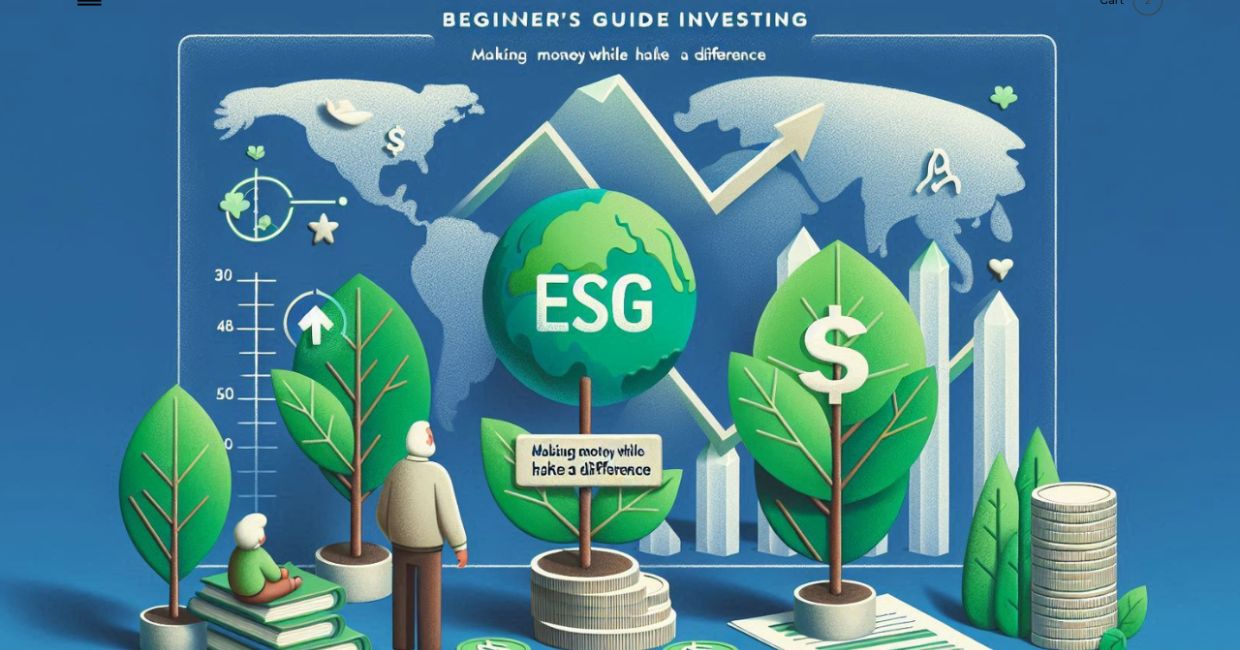
The answer lies in ESG investing — a powerful approach that combines financial success with positive social and environmental impact. ESG stands for Environmental, Social, and Governance, and it represents a new era in responsible wealth creation.
This movement isn’t just a moral trend — it’s a financial revolution. Companies with strong ESG practices are often more resilient, innovative, and profitable in the long run. As the world faces climate change, inequality, and governance scandals, ESG investing offers a way to align your portfolio with your values and still earn competitive returns.
Index Fund Investing: The Easiest Way to Build Wealth
1. What Is ESG Investing?
ESG investing refers to investing in companies that meet specific standards in three key areas:
- Environmental (E): How a company impacts the planet.
- Does it reduce carbon emissions?
- Does it use renewable energy?
- How does it manage waste and resources?
- Social (S): How a company treats people — both inside and outside the organization.
- Does it promote diversity and equality?
- How does it treat employees and communities?
- Does it respect human rights?
- Governance (G): How a company is managed.
- Are its leaders ethical and transparent?
- Is the board diverse and independent?
- Are shareholder rights protected?
In simple terms, ESG investing is about supporting companies that do good business the right way. It’s where profits and purpose meet.
2. The Rise of ESG Investing
A decade ago, ESG investing was considered niche — a feel-good option for socially conscious investors. But times have changed dramatically.
Today, ESG assets represent trillions of dollars worldwide. According to major financial reports, global ESG assets could exceed $50 trillion by 2025, making up more than one-third of total assets under management.
The reasons for this rapid growth include:
- Climate awareness: Investors are increasingly concerned about sustainability and the planet’s future.
- Consumer demand: People prefer brands that share their values.
- Regulations: Governments are introducing stricter ESG disclosure requirements.
- Performance: Many ESG investments have proven to perform as well as — or even better than — traditional investments.
In short, ESG is not just an ethical choice anymore — it’s a smart business strategy.
3. How ESG Investing Works
ESG investing integrates non-financial factors (like sustainability and ethics) into the investment decision-making process alongside traditional metrics like earnings and growth.
The ESG Scoring System
Companies are rated based on their ESG performance using data from specialized rating agencies like MSCI, Sustainalytics, or Morningstar.
A higher ESG score indicates stronger sustainability and governance practices.
For example:
- A company investing in clean energy might score high in Environmental.
- A firm with diverse leadership might rank well in Social.
- A business known for transparency and ethical leadership would excel in Governance.
Investors can use these ratings to choose funds, stocks, or ETFs that align with their ethical and financial goals.
4. The Types of ESG Investment Strategies
ESG investing isn’t one-size-fits-all. Different investors take different approaches based on their values and risk tolerance.
1. Negative Screening
Excluding companies or industries that don’t meet ESG standards.
Example: Avoiding investments in fossil fuels, tobacco, or weapons manufacturers.
2. Positive Screening
Actively selecting companies with strong ESG practices.
Example: Investing in renewable energy companies or firms with diverse boards.
3. Impact Investing
Investing directly in businesses or projects that create measurable positive social or environmental outcomes.
Example: Microfinance initiatives or clean water startups.
4. ESG Integration
Incorporating ESG data into all investment decisions alongside financial metrics to assess long-term risk and opportunity.
5. Thematic Investing
Focusing on specific ESG themes, such as clean energy, sustainable agriculture, or gender equality.
Each approach allows investors to balance their personal ethics with financial performance goals.
5. The Financial Case for ESG Investing
One of the biggest myths about ESG investing is that it means sacrificing profits for principles. But research shows the opposite is true.
a. ESG Companies Are More Resilient
Companies that manage environmental and social risks are less likely to face lawsuits, scandals, or regulatory fines — all of which can hurt profitability.
b. Long-Term Stability
Sustainable practices lead to better resource management, employee satisfaction, and brand loyalty — key ingredients for consistent long-term growth.
c. Stronger Risk Management
ESG-focused companies tend to anticipate and adapt to change faster — whether it’s new regulations, climate risks, or consumer expectations.
d. Better Returns
Studies from Morgan Stanley and Morningstar show that ESG funds often perform as well or better than traditional funds, especially during market downturns.
In essence, ESG investing isn’t charity — it’s smart investing with foresight.
6. Examples of Strong ESG Companies
Here are a few real-world examples of companies recognized for their outstanding ESG performance:
- Microsoft: Achieved carbon neutrality in 2012 and plans to be carbon negative by 2030.
- Tesla: Drives global electric vehicle adoption, reducing emissions worldwide.
- Unilever: Promotes sustainability across its supply chain, with initiatives for fair trade and waste reduction.
- Nvidia: Known for strong corporate governance and clean energy commitments.
- Patagonia: Uses sustainable materials and donates a portion of profits to environmental causes.
Investing in companies like these not only supports ethical business but also taps into markets driving the future economy.
7. ESG Investing Options for Beginners
If you’re new to investing or simply want to incorporate ESG principles into your portfolio, there are several easy entry points.
a. ESG Mutual Funds
Actively managed funds that include companies with strong ESG scores. These are great for hands-off investors who prefer professional management.
b. ESG Exchange-Traded Funds (ETFs)
ETFs are popular for their low costs and diversification. ESG ETFs track indexes like:
- iShares MSCI USA ESG Select ETF (SUSA)
- Vanguard ESG U.S. Stock ETF (ESGV)
- SPDR S&P 500 ESG ETF (EFIV)
c. Robo-Advisors with ESG Options
Platforms like Betterment, Wealthfront, and Ellevest offer automated ESG portfolios tailored to your risk level and goals.
d. Direct Stock Investing
If you prefer more control, you can research and invest in individual companies with high ESG ratings.
e. Green Bonds
These are fixed-income investments where proceeds are used to fund environmentally friendly projects like renewable energy or reforestation.
No matter your experience level or budget, there’s an ESG option suited to you.
8. How to Evaluate ESG Investments
Choosing the right ESG investment requires more than just looking at labels. Here’s how to dig deeper:
- Check ESG Ratings: Use tools like MSCI or Morningstar to compare companies and funds.
- Review Holdings: Some funds may claim to be ESG-friendly but still include questionable companies — a problem known as greenwashing.
- Understand the Criteria: Not all ESG funds weigh the three components (E, S, and G) equally. Make sure their priorities align with yours.
- Look at Performance: Ensure the fund’s long-term performance is strong and consistent.
- Assess Fees: Low-cost index-based ESG funds can be just as effective as expensive active ones.
A little research goes a long way in ensuring your investment aligns with your goals — both ethical and financial.
9. The Risks and Challenges of ESG Investing
Like any investment strategy, ESG investing comes with its own challenges.
a. Greenwashing
Some companies exaggerate their ESG efforts to attract investors without making meaningful changes. Always verify claims using independent data sources.
b. Lack of Standardization
There’s no universal definition of what qualifies as “ESG.” Different agencies use different scoring systems, which can be confusing.
c. Limited Historical Data
Since ESG investing is relatively new, long-term performance data is still developing — though trends are promising.
d. Sector Exclusion Risks
By avoiding certain industries (like oil or defense), ESG portfolios may miss out on short-term gains during specific market cycles.
Still, these risks can be managed through proper diversification and research.
10. The Moral and Social Impact of ESG Investing
ESG investing isn’t just about numbers — it’s about influence.
When investors direct money toward sustainable companies, they send a powerful signal to the market: ethical behavior and social responsibility are profitable.
This pressure encourages corporations to:
- Adopt greener energy solutions
- Improve workplace diversity and safety
- Increase transparency and fair governance
- Prioritize long-term sustainability over short-term profits
In essence, ESG investing allows you to vote with your dollars — pushing businesses to act responsibly while you grow your wealth.
11. The Future of ESG Investing
ESG investing isn’t a fad — it’s the future of finance. As climate change, inequality, and governance issues become more urgent, demand for ESG transparency will only increase.
Here are key trends shaping the future:
- AI and Big Data: Improving ESG scoring accuracy and accountability.
- Government Regulation: More countries are requiring public ESG reporting.
- Corporate Accountability: Investors now hold companies accountable for real progress, not empty promises.
- Global Expansion: ESG investing is rapidly spreading across emerging markets.
Tomorrow’s most successful companies will be those that combine profitability with purpose.
12. How to Build Your Own ESG Portfolio
Here’s a simple guide to start building a sustainable and profitable ESG portfolio:
Step 1: Define Your Priorities
Decide which issues matter most to you — climate change, gender equality, clean energy, or governance.
Step 2: Choose Your Strategy
Will you go for ESG ETFs, mutual funds, or individual stocks? Consider your risk tolerance and investment goals.
Step 3: Diversify
Spread your investments across different sectors, geographies, and asset classes to reduce risk.
Step 4: Invest Consistently
Use dollar-cost averaging — investing a fixed amount regularly — to smooth out market fluctuations.
Step 5: Monitor and Rebalance
Review your portfolio annually. As ESG scores or company practices change, adjust accordingly.
Step 6: Stay Informed
Follow ESG news and reports. The field evolves rapidly, and staying updated helps you make better choices.
13. Real-Life Examples of ESG Success
1. BlackRock
The world’s largest asset manager, BlackRock, now prioritizes ESG principles across its funds, believing sustainability is the “new standard for investing.”
2. Ørsted
Once an oil company, Ørsted transformed into a global leader in offshore wind energy. Its stock has soared, showing how sustainability can drive profits.
3. Beyond Meat
By offering plant-based alternatives, Beyond Meat aligns with environmental and social values while tapping into massive market demand.
These examples prove that sustainability and success can — and do — coexist.
14. ESG Investing vs. Traditional Investing
| Aspect | Traditional Investing | ESG Investing |
|---|---|---|
| Primary Goal | Maximize profits | Balance profits with purpose |
| Focus | Financial performance only | Environmental, social, and governance impact |
| Risk Management | Market and financial risks | Market, ethical, and long-term sustainability risks |
| Investor Motivation | Return-driven | Return + Responsibility-driven |
| Examples | Oil companies, tobacco stocks | Renewable energy, ethical tech firms |
While traditional investing focuses solely on short-term profits, ESG investing aims to build sustainable wealth — both financially and socially.
15. The Long-Term Advantages of ESG Investing
- Sustainable Growth: ESG companies are built for longevity.
- Attracting Talent: Ethical companies draw top employees, boosting productivity.
- Customer Loyalty: People increasingly support brands that align with their values.
- Reduced Risk: ESG firms face fewer scandals, lawsuits, and fines.
- Better Returns: Studies show ESG portfolios often outperform during crises.
In the end, ESG investing aligns your financial goals with the broader goal of creating a better, fairer, and greener world.
Conclusion: Profit with Purpose
The beauty of ESG investing is its balance — it lets you make money without compromising your morals. It’s about creating wealth that matters, not just for your portfolio but for the planet and people who share it.
By choosing to invest responsibly, you’re not only securing your financial future but also shaping the kind of world that future will exist in.
You don’t have to choose between profit and purpose anymore. With ESG investing, you can have both — and that’s not just good ethics, it’s good economics.
So, start today. Research, invest, and take ownership of your impact. Because when your money aligns with your values, you don’t just build wealth — you build a legacy.