How to Pay Off Debt Fast Using the Snowball Method
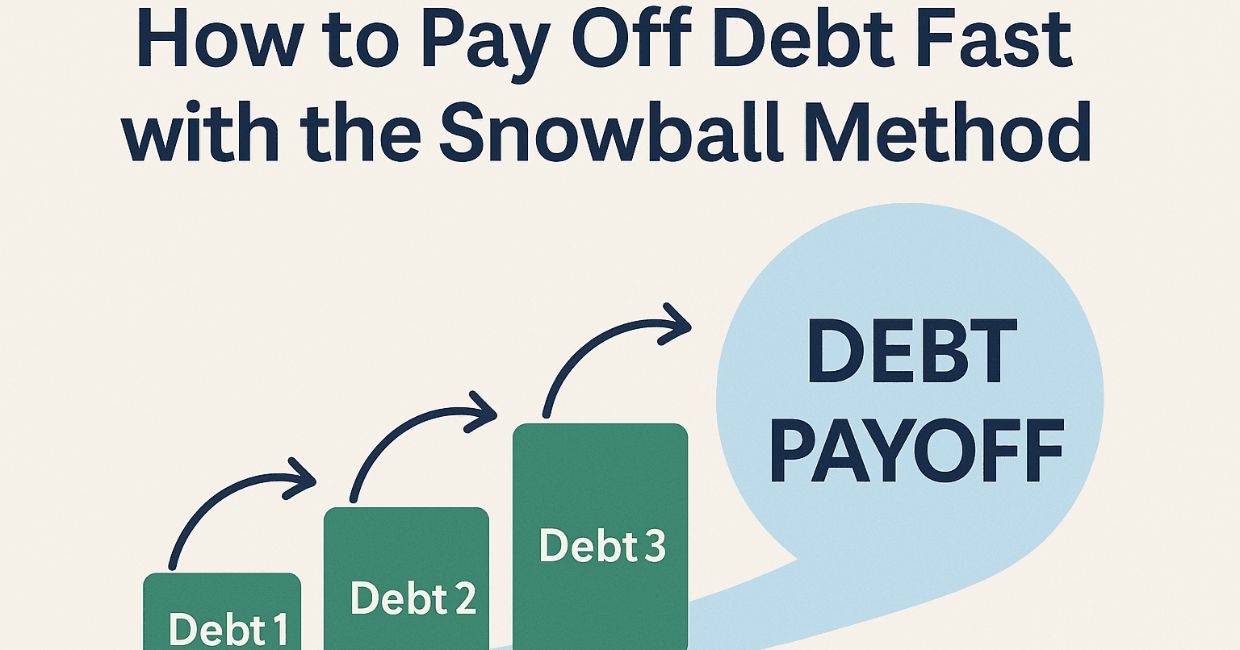
Snowball Method
Debt can feel like a heavy weight that never seems to lift. Whether it’s credit cards, personal loans, or medical bills, watching your hard-earned money disappear into monthly payments can be discouraging. But what if there was a simple, proven strategy to help you pay off debt faster — and actually enjoy the process?
Enter the Snowball Method — a powerful debt repayment strategy that has helped thousands of people regain control of their finances and achieve freedom from debt. In this article, we’ll break down how the Snowball Method works, why it’s so effective, and step-by-step instructions on how to use it to become debt-free faster than you thought possible.
9 Tips to Finally Get Out of Credit Card Debt
Understanding the Debt Snowball Method
The Debt Snowball Method was popularized by financial expert Dave Ramsey, and it’s based on a simple but highly motivating concept: start small to build momentum.
Instead of focusing on interest rates, the Snowball Method focuses on psychological progress — giving you small wins early on to build confidence and motivation as you eliminate your debts one by one.
Here’s the basic idea:
- List all your debts from smallest to largest balance (ignore interest rates for now).
- Make minimum payments on all debts except the smallest one.
- Throw every extra dollar you can at your smallest debt until it’s gone.
- Once you’ve paid off the smallest debt, roll its payment into the next debt on your list.
- Repeat the process until every debt is paid off.
Just like a snowball rolling downhill, your progress starts small but builds momentum as you go.
Why the Snowball Method Works
At first glance, some people think the Snowball Method doesn’t make mathematical sense — after all, wouldn’t it be smarter to pay off high-interest debt first?
That’s where human psychology comes in. Money management isn’t just about math — it’s about motivation and mindset.
Here’s why the Snowball Method is so effective:
- Quick wins build confidence: Paying off small debts gives you a sense of accomplishment early in the process.
- Momentum keeps you going: Each debt you eliminate frees up more money to tackle the next one.
- Simplifies your finances: You focus on one debt at a time, making the process clear and achievable.
- Creates positive financial habits: Consistent progress builds discipline and confidence in money management.
In other words, the Snowball Method turns debt payoff from a burden into a game — and winning that game keeps you going until you’re debt-free.
Step-by-Step Guide to Paying Off Debt Fast Using the Snowball Method
Let’s break down exactly how to use the Snowball Method to eliminate debt efficiently and effectively.
Step 1: List All Your Debts from Smallest to Largest
The first step is simple — write down all your debts in order of balance size, not interest rate.
Here’s what your list might look like:
- Credit Card A — $400
- Medical Bill — $900
- Personal Loan — $2,500
- Credit Card B — $3,200
- Auto Loan — $9,000
The idea is to tackle the smallest balance first, regardless of how high the interest rate is. This helps you achieve quick progress, which boosts motivation.
Step 2: Make Minimum Payments on All Debts
While working the Snowball Method, you’ll continue making minimum payments on all your debts except the smallest one.
This keeps your accounts in good standing and prevents late fees or damage to your credit score.
The key is to free up as much money as possible for the smallest debt while still meeting your obligations on the others.
Step 3: Focus All Extra Money on Your Smallest Debt
Once you’ve listed your debts and set your minimum payments, it’s time to attack the smallest debt with everything you’ve got.
Any extra income you can find — side hustle money, bonuses, tax refunds, or even savings from cutting expenses — should go toward eliminating that smallest debt.
For example, if your minimum payment is $50 but you can afford an extra $150, pay $200 total toward that debt.
The faster you wipe it out, the sooner you’ll move on to the next one — and the quicker your snowball will start rolling.
Step 4: Roll Over the Payment to the Next Debt
Once your smallest debt is completely paid off, don’t stop there.
Take the payment you were making toward that debt and add it to the minimum payment of your next-smallest balance.
For example:
- Debt 1 (paid off): $200 total payment
- Debt 2 minimum payment: $75
- New total payment toward Debt 2: $275
This “rollover effect” is what gives the method its name. Each time you pay off a debt, your available payment grows — just like a snowball getting bigger and faster as it rolls downhill.
Step 5: Keep Repeating Until You’re Debt-Free
Continue the process — knocking out debts one by one, rolling your payments into the next, and celebrating each victory along the way.
As you eliminate more debts, you’ll notice:
- Your total payments get larger each month.
- Your motivation skyrockets.
- Your financial stress starts to fade.
Eventually, you’ll look up and realize you’re debt-free — a feeling that’s hard to describe until you experience it.
Example: How the Snowball Method Works in Action
Let’s look at a real-world example to see how this method plays out.
Meet Sarah
Sarah has the following debts:
- Credit Card: $600 — $25 minimum payment
- Medical Bill: $1,000 — $50 minimum payment
- Car Loan: $5,000 — $200 minimum payment
Sarah has an extra $150 per month to put toward her debt.
Month 1–3:
- She pays $175 ($25 minimum + $150 extra) on her credit card until it’s gone in about three months.
Month 4–12:
- She then rolls that $175 into her next debt (Medical Bill), paying $225 per month ($175 + $50 minimum).
- In five months, she pays off her medical bill completely.
Month 13 onward:
- Now she rolls that $225 into her car loan payment, making payments of $425 per month ($225 + $200).
- In just over a year, she pays off her car loan completely.
In about 20 months total, Sarah is debt-free — and she never lost motivation along the way because she could see her progress growing month by month.
How to Find Extra Money to Speed Up Your Snowball
If you want to pay off debt even faster, you can supercharge your snowball by finding extra income or cutting expenses.
Here are a few practical ideas:
1. Create a Budget
Start by tracking where your money goes each month. You might be surprised how much you spend on things like dining out or subscriptions. Use budgeting apps like Mint or YNAB to identify areas to cut back.
2. Reduce Unnecessary Expenses
Cancel unused subscriptions, cook at home, or limit impulse shopping. Even small savings can make a big difference when added to your snowball.
3. Sell Unused Items
Declutter your home and sell unwanted items online. The cash you earn can go directly toward your smallest debt.
4. Start a Side Hustle
Freelance work, part-time jobs, or selling handmade goods can add hundreds of extra dollars each month to accelerate your debt payoff.
5. Use Windfalls Wisely
Tax refunds, work bonuses, or birthday money — instead of spending it, apply it directly to your debt. Every lump sum helps your snowball grow faster.
The Psychological Benefits of the Snowball Method
The Snowball Method isn’t just about numbers — it’s about mindset.
Here’s what makes it so powerful psychologically:
- Immediate gratification: Paying off a small debt early gives you a quick win, reinforcing good habits.
- Visible progress: Watching your list shrink builds motivation.
- Confidence boost: Each debt you eliminate makes the next one feel more achievable.
- Sense of control: You move from feeling overwhelmed to feeling empowered.
That emotional shift is what makes the Snowball Method sustainable — and why it works even when other strategies fail.
Snowball Method vs. Avalanche Method
You may have heard of the Debt Avalanche Method, which prioritizes debts by interest rate instead of balance size. Let’s compare the two approaches.
| Feature | Snowball Method | Avalanche Method |
|---|---|---|
| Focus | Smallest balance first | Highest interest rate first |
| Motivation | Builds quickly with early wins | Slower progress but saves more money |
| Simplicity | Easy to follow | Requires more discipline |
| Best For | People needing motivation and momentum | People comfortable with long-term savings |
Which Is Better?
- If you’re driven by seeing quick results, the Snowball Method is perfect.
- If you’re motivated by saving the most money on interest, the Avalanche Method might be better.
Ultimately, the “best” method is the one you’ll stick with consistently. Many people start with the Snowball Method to build momentum and switch to Avalanche later.
Common Mistakes to Avoid When Using the Snowball Method
While the Snowball Method is simple, there are a few traps to watch out for:
1. Adding New Debt
Avoid taking on new loans or credit card balances while paying off your current debts. This slows your progress and keeps you trapped in the cycle.
2. Ignoring Emergency Savings
Always keep a small emergency fund (at least $1,000). Without it, unexpected expenses can derail your plan.
3. Losing Motivation Midway
Debt repayment takes time. Celebrate small wins, track progress visually, and remind yourself of your “why.”
4. Not Budgeting Properly
Without a clear budget, you might not free up enough cash to make meaningful progress. Budgeting and snowballing go hand-in-hand.
5. Overlooking Lifestyle Changes
Paying off debt fast often requires changes in habits — like cooking at home, driving less, or avoiding impulse buys. Be willing to adjust.
How Long Will It Take to Pay Off Debt Using the Snowball Method?
The timeline depends on:
- The total amount of debt you owe.
- How much extra money you can put toward payments each month.
- Your commitment to sticking with the plan.
On average, many people using the Snowball Method pay off all their consumer debt within 18–36 months. Some finish even faster if they aggressively add extra income or bonuses.
What to Do After You Become Debt-Free
Paying off debt is an incredible milestone — but it’s just the beginning of your financial journey. Once you’re debt-free, it’s time to build lasting stability.
1. Build an Emergency Fund
Save 3–6 months of living expenses to protect yourself from future financial shocks.
2. Invest for the Future
Start contributing to retirement accounts or other long-term investments. The money you used for debt payments can now build wealth.
3. Set New Financial Goals
Want to buy a home, start a business, or travel? The financial discipline you built through the Snowball Method can help you achieve those dreams.
4. Stay Debt-Free
Commit to avoiding unnecessary credit card use or high-interest loans in the future. Use the lessons you’ve learned to maintain financial freedom.
Final Thoughts: Start Your Debt-Free Journey Today
The Snowball Method isn’t just a debt payoff strategy — it’s a mindset shift. It takes something overwhelming and turns it into a series of achievable goals. Each small victory builds momentum, confidence, and hope.
By focusing on one debt at a time, rolling payments forward, and celebrating every win, you’ll watch your financial burden shrink month after month.
So don’t wait for the perfect moment — start today. List your debts, make your first extra payment, and begin rolling your snowball. With consistency, patience, and determination, you can pay off your debt faster than you ever thought possible — and finally enjoy the freedom you deserve.