The Power of Compounding Income: How Small Gains Create Massive Wealth Over Time
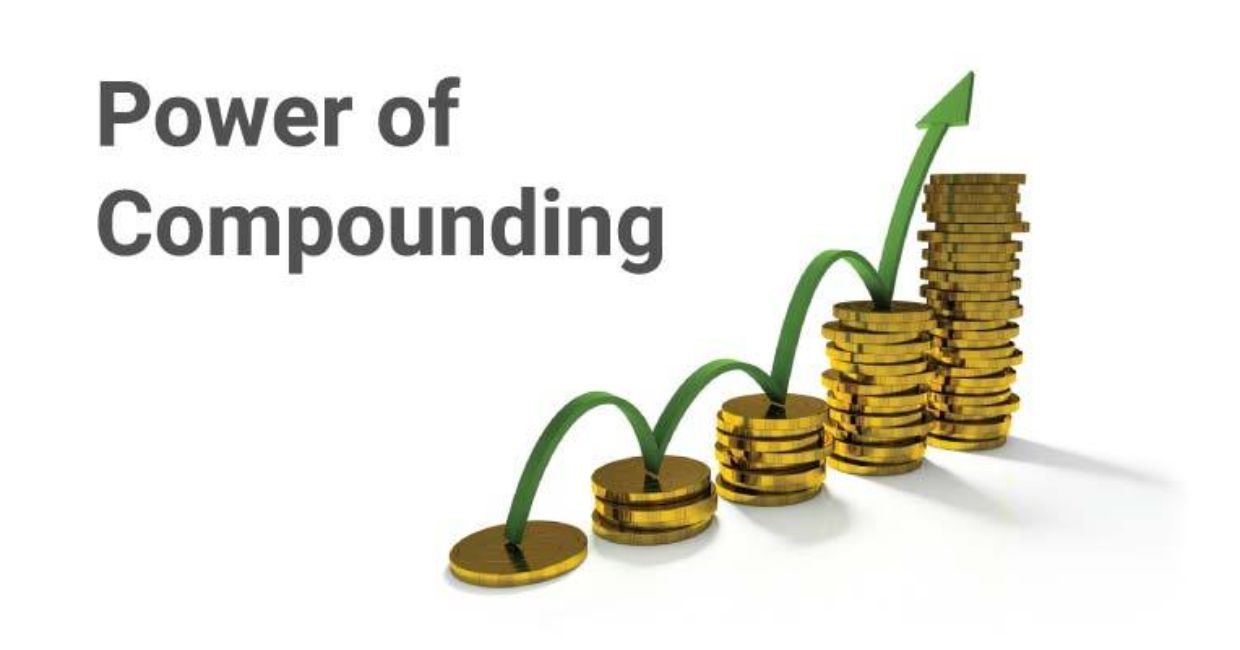
Power of Compounding
When it comes to building wealth, few forces are as powerful—or as underrated—as compounding income. Often called the “eighth wonder of the world” by financial experts, compounding has the potential to turn small, consistent efforts into massive financial success over time.
Yet, despite its simplicity, many people fail to harness its full potential. They underestimate how small investments, when allowed to grow, can transform into substantial wealth with patience and consistency.
In this article, we’ll explore what power of compounding income truly means, how it works, why it’s so powerful, and how you can start leveraging it today to build lasting financial freedom.
10 Passive Income Ideas to Build Wealth in 2025
1. Understanding the Concept of Compounding Income
Before diving into strategies, it’s essential to understand what compounding income actually is.
At its core, compounding income is the process of earning income not only on your initial investment but also on the income your investment has already generated. It’s wealth building on autopilot—your money making more money for you, continuously and effortlessly.
For example, if you invest $1,000 at a 10% annual return, you earn $100 in the first year. In the second year, you earn 10% not just on the original $1,000, but also on the $100 you earned earlier—so your total grows to $1,210. Over time, this snowball effect can create exponential growth.
The Formula Behind Compounding
The basic compound interest formula is:
A = P (1 + r/n)ⁿᵗ
Where:
- A = final amount after t years
- P = principal amount (initial investment)
- r = annual interest rate (in decimal)
- n = number of times interest is compounded per year
- t = number of years
Though it looks like a math problem, it’s really a life principle: the longer your money works, the harder it works for you.
2. The Real Power Lies in Time
Compounding doesn’t rely on luck—it relies on time and consistency. The longer you stay invested, the greater your results. This is why starting early can make such a huge difference.
Let’s compare two investors:
- Investor A starts investing $200 per month at age 25.
- Investor B starts the same at age 35.
Assuming both earn an 8% annual return, by age 65: - Investor A ends up with $587,000.
- Investor B ends up with only $260,000.
That’s a difference of over $327,000, just for starting ten years earlier.
The Lesson:
The sooner you start, the more time your money has to grow, multiply, and build a fortune for you. Time turns small, consistent actions into extraordinary results.
3. The Psychology of Compounding Income
Compounding isn’t just a financial principle—it’s a mindset. To truly benefit, you must think long-term and resist the temptation of instant gratification.
Most people fail to realize their potential wealth because they:
- Chase quick profits instead of long-term gains.
- Withdraw earnings instead of reinvesting them.
- Stop investing when markets fluctuate.
True wealth builders, however, understand patience. They keep reinvesting, stay disciplined, and allow their earnings to keep working. This mindset shift—from short-term gain to long-term growth—is what separates the financially free from the financially frustrated.
4. How Compounding Income Works in Different Forms
Compounding isn’t limited to savings accounts. It applies across various types of income-generating assets. Let’s explore how it works in different investment vehicles.
a) Savings and Fixed Deposits
When you keep money in an interest-bearing account, compounding helps your balance grow automatically. While the returns may be modest, the principle remains the same—interest earns interest.
b) Dividend Stocks
When you reinvest dividends from stocks back into purchasing more shares, your returns compound. Each share you own generates dividends, and reinvesting them leads to exponential growth over time.
c) Real Estate
Real estate investors experience compounding when they reinvest rental income into new properties. Additionally, appreciation over time amplifies the wealth effect.
d) Mutual Funds and ETFs
Automatic dividend reinvestment plans (DRIPs) let investors compound returns seamlessly. Over years, this reinvestment can double or triple your portfolio’s growth.
e) Business Income
If you own a business, compounding occurs when profits are reinvested into scaling operations, improving systems, or launching new products. Each reinvestment multiplies your earning potential.
f) Passive Income Streams
Royalties, affiliate marketing, and online content creation can compound income when reinvested into expanding reach, building automation, or growing brand equity.
Compounding isn’t just for financial products—it’s a universal principle that applies to every wealth-building activity where earnings can be reinvested.
5. The Rule of 72: Measuring the Power of Compounding
The Rule of 72 is a quick way to estimate how long it will take for your money to double through compounding.
The formula is simple:
72 ÷ Annual Interest Rate = Years to Double
For instance, if you earn a 9% annual return, your investment will double roughly every 8 years (72 ÷ 9 = 8).
This small equation reveals just how quickly wealth can grow when compounding is in play. The higher the return—and the longer you stay invested—the faster your wealth multiplies.
6. How Reinvesting Accelerates Wealth
The key to compounding income is reinvestment. If you spend your returns, compounding stops. But when you reinvest them, your earning potential explodes.
Let’s take an example:
If you invest $10,000 at 8% annual return and withdraw the $800 gain each year, after 20 years you’ll have only $26,000. But if you reinvest the gains each year, you’ll end up with over $46,000—nearly double, without adding a single extra dollar.
The Takeaway:
Every time you reinvest instead of spend, you accelerate your wealth-building curve. Reinvestment is the fuel that powers compounding income.
7. Patience: The Secret Ingredient
Compounding rewards patience and discipline. Most investors fail to benefit because they give up too soon or interrupt the process.
The truth is, the first few years of compounding often show minimal growth. The magic happens later, as returns begin to grow exponentially.
Albert Einstein reportedly said, “Compound interest is the eighth wonder of the world. He who understands it, earns it; he who doesn’t, pays it.”
Those who stay the course for decades see extraordinary results because compounding multiplies with time, not with haste.
8. Avoiding Common Mistakes That Break Compounding
Compounding is powerful, but it’s not invincible. Certain financial habits can interrupt or slow it down.
Mistakes to Avoid:
- Withdrawing Too Early: Each withdrawal resets the compounding clock.
- Ignoring Fees: High management or transaction fees reduce your compounding rate.
- Chasing High-Risk Returns: Volatile investments can destroy gains and interrupt growth.
- Not Reinvesting: Taking profits instead of reinvesting them kills compounding potential.
- Starting Late: The later you begin, the less time compounding has to work.
To maximize compounding, protect your investments from unnecessary leaks, keep reinvesting, and stay invested long enough to see exponential results.
9. Compounding in Real Life: Small Steps, Big Outcomes
Let’s illustrate with a real-world example:
If you invest $500 per month at an 8% annual return:
- After 10 years → $91,000
- After 20 years → $294,000
- After 30 years → $745,000
That’s the beauty of compounding — the biggest growth comes at the end, when time and consistency have worked their magic.
It’s not about huge contributions; it’s about steady ones. The earlier and more consistent you are, the larger your wealth snowball becomes.
10. Compounding Beyond Money: Habits and Knowledge
The power of compounding doesn’t just apply to money—it applies to habits, learning, and relationships too.
When you read a book daily, improve your skills, or network regularly, your personal value compounds just like your financial investments. Over time, these compounded efforts result in higher income, better opportunities, and greater success.
Wealth Tip:
Combine financial compounding with personal growth compounding. As your knowledge and discipline grow, your money multiplies even faster.
11. Compounding and Inflation: The Real Comparison
While compounding grows wealth, inflation erodes it. That’s why you must invest in assets that grow faster than inflation.
If your savings earn 3% and inflation is 4%, you’re technically losing 1% in purchasing power each year. But with compounding investments earning 8–10%, your real returns remain strong despite inflation.
To protect your wealth, invest in growth assets—stocks, real estate, index funds, or other vehicles that historically outpace inflation through compounded returns.
12. Using Compounding to Achieve Financial Freedom
The ultimate goal of compounding income is financial independence—when your money works harder than you do.
This happens when your passive income from compounded investments exceeds your expenses. You no longer depend on a paycheck; your investments generate enough to sustain your lifestyle.
Example:
If you need $50,000 per year and your investments yield 5% annually, you’d need a portfolio of about $1 million. With consistent investing and compounding, this goal is achievable—even on an average income—given enough time.
Financial freedom isn’t just about saving—it’s about harnessing compounding income to make money flow toward you continuously.
13. How to Start Harnessing the Power of Compounding
Even if you’re starting from zero, you can leverage compounding to grow wealth. Here’s how:
Step 1: Start Now
The earlier you begin, the stronger your results. Don’t wait for the “right time” — every day counts.
Step 2: Automate Investments
Set up automatic transfers to investment accounts. Automation ensures consistency, which is essential for compounding.
Step 3: Choose Growth-Oriented Assets
Focus on assets like index funds, ETFs, or dividend-paying stocks that compound returns efficiently.
Step 4: Reinvest All Earnings
Never withdraw interest, dividends, or profits early. Reinvest to accelerate growth.
Step 5: Stay the Course
Avoid panic-selling during downturns. Compounding rewards patience, not reaction.
With these steps, anyone can build a compounding engine that grows stronger with every passing year.
14. The Magic of Exponential Growth
The real magic of compounding lies in exponential growth—a phenomenon where wealth grows slowly at first, then rapidly accelerates.
For instance, if your investment doubles every 10 years:
- In 10 years, $10,000 → $20,000
- In 20 years, $20,000 → $40,000
- In 30 years, $40,000 → $80,000
The first doubling feels small, but each subsequent doubling grows dramatically larger. That’s the exponential nature of compounding—the longer you stay invested, the more explosive your growth becomes.
15. Building a Compounding Portfolio for 2025 and Beyond
In 2025, with more investment options than ever, there are multiple ways to take advantage of compounding income:
- Dividend Reinvestment Plans (DRIPs): Reinvest dividends automatically.
- Index Funds and ETFs: Diversified, low-cost compounding through long-term growth.
- High-Yield Savings Accounts: A safe, though slower, compounding option.
- Real Estate Crowdfunding: Reinvest rental returns digitally.
- Cryptocurrency Staking: Earn compounding rewards from blockchain participation.
Modern tools make compounding accessible to anyone, anywhere — no excuses needed.
16. Why Most People Miss Out on Compounding
Despite its simplicity, most people never see compounding’s full potential because they:
- Start too late.
- Quit too early.
- Don’t reinvest gains.
- Try to time the market instead of staying consistent.
The winners are not the smartest or luckiest—they’re the ones who stay consistent and patient for decades.
17. The Compounding Mindset: Think in Decades, Not Days
True wealth builders don’t think in weeks or months—they think in decades. They know that compounding requires time, trust, and consistency.
You don’t need to be rich to start; you just need to start. Even small amounts, consistently invested, can create life-changing results over time.
Think long-term, stay patient, and let time do its work. That’s how fortunes are built—not by chasing quick wins, but by letting compounding quietly multiply your wealth behind the scenes.
18. Final Thoughts: Let Time and Consistency Work for You
The power of compounding income isn’t a secret—it’s a proven, time-tested principle that has created every major fortune in history. From Warren Buffett to everyday investors, those who respect the power of compounding always win in the long run.
Here’s the truth: You don’t need to work harder; you need your money to work smarter.
By starting early, staying consistent, reinvesting your earnings, and thinking long-term, you can unlock exponential financial growth that continues even while you sleep.
The best part? Anyone can do it—no matter where they start.
So today, make the choice to put compounding on your side. Because time waits for no one, but it rewards those who use it wisely.